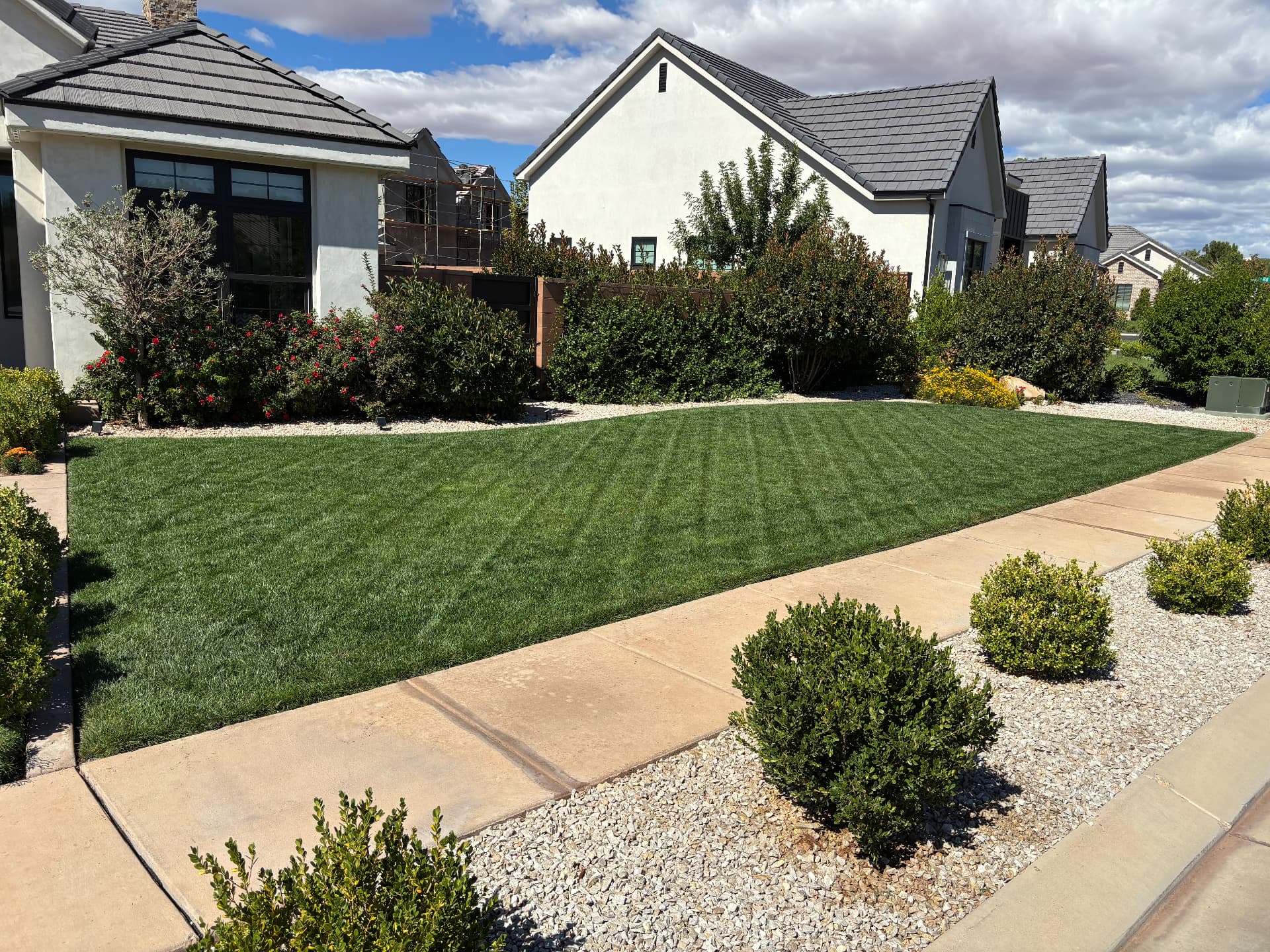
Sod can give a St. George yard an immediate lawn surface, but a finished appearance is not the same as an established root system. The condition of the soil and the reliability of the irrigation underneath that surface have a major role in what happens next.
Southern Utah heat makes preparation especially important because newly laid sod depends on consistent moisture while roots develop into the soil below. Before installation, decide where lawn belongs, how it will be watered, and how you will protect it while it becomes established.
Choose Lawn Areas With a Clear Purpose
Start with the spaces your household will actually use for play, pets, or relaxing outdoors. A defined lawn area can be easier to irrigate evenly than disconnected strips around pavement and planting beds. Shape the layout around useful space rather than filling every open corner with grass.
Think about shade, reflected heat, slope, and access when reviewing the plan. A narrow strip beside a driveway may be difficult to water without overspray, while a steep section may be prone to runoff. These are layout questions to resolve before ordering sod, not after it arrives.
Inspect the Soil Instead of Covering Problems
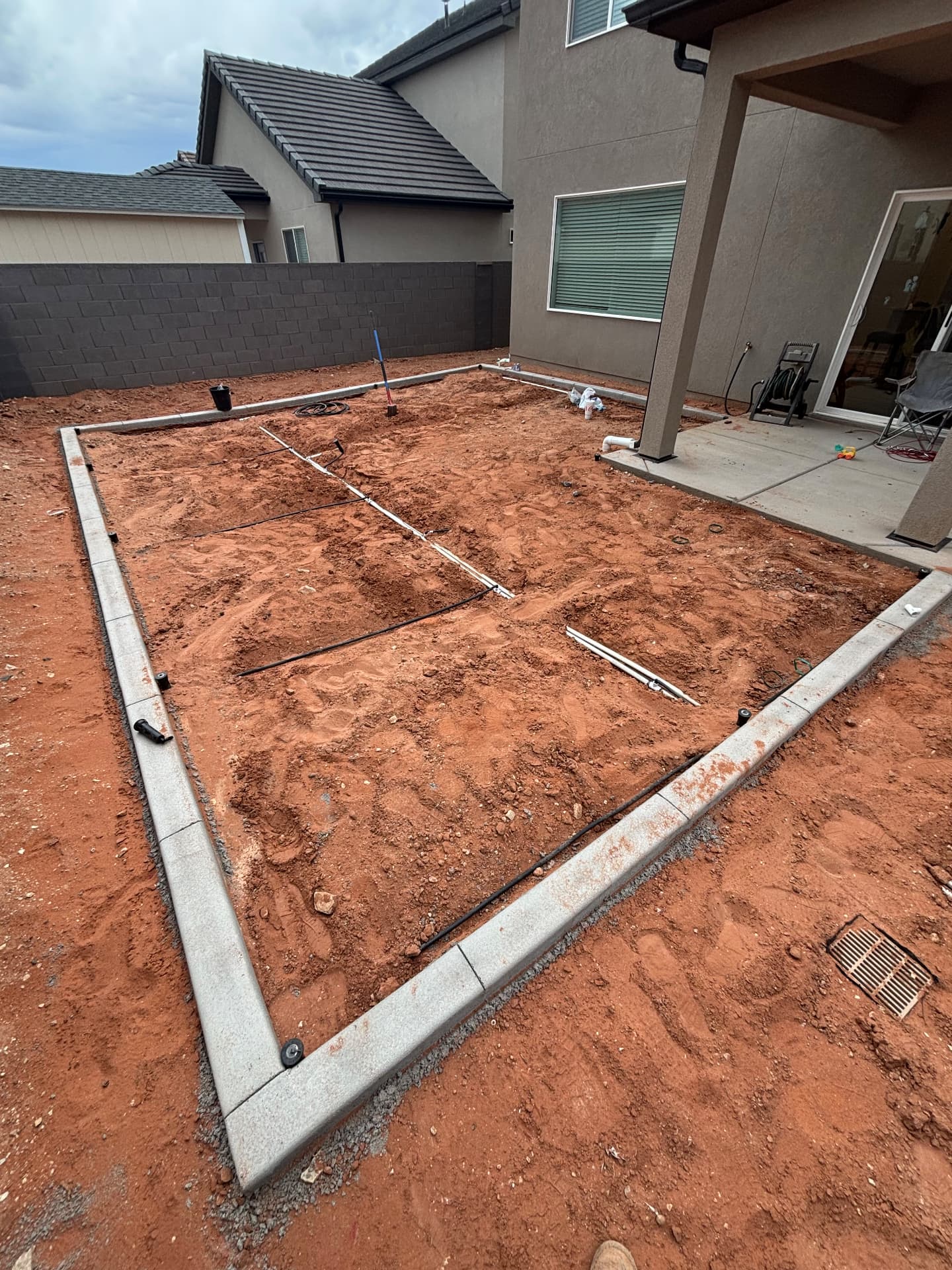
A smooth-looking surface can hide compacted ground, construction debris, or uneven soil conditions. Roots need contact with a suitable growing medium, so preparation should address what is below the final grade. Simply placing sod over a hard or debris-filled surface does not correct those limitations.
Inspect representative areas and consider soil testing when soil condition or amendments are uncertain. A test can help guide decisions instead of adding products by habit. Any amendment should be selected for a specific need and incorporated appropriately rather than left as a separate layer beneath the sod.
Coordinate Grading With Drainage
The finished lawn should meet adjoining surfaces thoughtfully while preserving intended drainage around the property. Account for the thickness of the sod when preparing the soil elevation. Low spots and abrupt transitions are harder to address once the lawn is in place.
On a new construction property, confirm the grading plan before changing elevations or moving soil near the house. Keep drainage routes and access points in view as patios, beds, and lawn are coordinated. A lawn installation should support the overall site plan rather than disguise unresolved drainage issues.
Make Irrigation Ready Before Delivery
Run every lawn zone before installation and observe where the water actually lands. Look for blocked patterns, dry corners, leaks, and water hitting pavement instead of soil. An operating controller does not guarantee that the entire lawn footprint receives useful coverage.
If the site needs a new system, coordinate sprinkler installation with the final lawn shape and grading. Heads should be positioned for the finished surface and accessible for adjustment. Resolve supply or coverage problems before fresh sod depends on that system.
- Confirm the lawn boundaries and finished elevations.
- Remove debris and address compaction identified during preparation.
- Check drainage and transitions at walks, patios, and beds.
- Test each irrigation zone across the entire planned lawn area.
- Arrange access and a clear watering plan before sod delivery.
- Discuss how pets and foot traffic will be kept off vulnerable areas.
Install for Contact, Not Just Appearance
Sod needs close contact with the prepared soil so roots can grow into it. The surface should be ready before installation begins, with large clods, hollows, and debris addressed. Edges should fit together without intentional overlaps or open gaps that expose the soil beneath.
Delivery and placement should be coordinated to avoid unnecessary storage and exposure, particularly during hot conditions. Ask the installer how the material will be handled and watered as work progresses. Decisions should follow the sod supplier’s guidance and actual site conditions rather than a generic calendar.
Treat Establishment as a Separate Stage
New sod initially relies on moisture near the surface and at the interface with the prepared ground. As roots develop, watering needs change. Follow guidance matched to the grass, weather, and soil rather than copying the schedule used on an established neighboring lawn.
Check several locations, including edges and areas near warm hardscape, because one damp spot does not represent the entire yard. Watch for both drying and excessive wetness. Water collecting or running away from the lawn calls for investigation, not an automatic increase in runtime.
Protect the Lawn as Roots Develop
Limit activity that shifts the sod or compresses wet soil while roots are developing. Keep pets and repeated walking routes away from vulnerable sections where practical. Use rooting progress and the installer’s guidance, rather than appearance alone, to judge when normal use and mowing are appropriate.
For new homes, coordinate the lawn with remaining construction and deliveries so equipment does not repeatedly cross prepared ground. A broader residential landscaping plan can align beds, paths, irrigation, and sod. That coordination helps avoid disturbing a newly installed lawn to finish another part of the yard.
Prepare First, Then Install
A successful sod project starts with a useful layout, prepared soil, and irrigation that has been tested before installation. Utah Desert Landscape, a family-operated company in Ivins, helps homeowners plan landscaping in St. George and across Washington County. Begin with those site decisions so your new lawn has a practical foundation for establishment.